

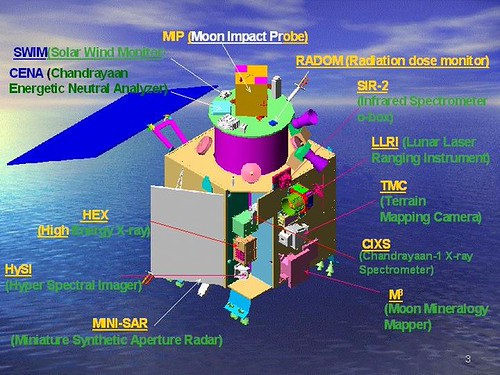
Chandrayaan-1 launch was a pivotal moment in India’s space journey. This mission not only showcased technological prowess but also opened new avenues for lunar research.
Significance of Chandrayaan-1 launch
The Chandrayaan-1 launch on October 22, 2008, marked a pivotal moment in India’s space exploration journey. This mission was not just a technological feat but also a symbol of India’s growing capabilities in the field of space science.
One of the significant aspects of the Chandrayaan-1 launch was its contribution to lunar research. The mission successfully mapped the moon’s surface and provided valuable data about its mineral composition and topography. This data has been crucial for understanding the moon’s history and evolution.
Moreover, the mission was instrumental in the discovery of water molecules on the lunar surface. This finding opened new avenues for future lunar exploration and potential human habitation, making the Chandrayaan-1 launch a landmark achievement in space science.
In addition to its scientific contributions, the launch also fostered national pride and inspired a new generation of scientists and engineers in India. The success of the mission demonstrated the potential of India’s space program and its ability to compete globally.
- First Indian mission to the moon.
- Discovery of water molecules on the lunar surface.
- Provided comprehensive data about the moon’s geology.
Overall, the Chandrayaan-1 launch remains a significant milestone, illustrating the importance of space exploration in advancing scientific knowledge and technological innovation.
Major events on October 22
On October 22, significant events have shaped history, among which the Chandrayaan-1 launch stands out as a monumental achievement for India and the global space community. This mission, which marked India’s foray into lunar exploration, was not just a technological triumph but also a source of national pride.
The following major events also occurred on this date:
- 1857: The birth of Ashfaqulla Khan, a notable revolutionary and poet, who played a crucial role in India’s struggle for independence.
- 1962: The Cuban Missile Crisis escalated, bringing the world to the brink of nuclear war.
- 1972: The launch of the Mariner 10 spacecraft, which became the first spacecraft to visit Mercury.
- 2001: The commencement of the United Nations International Year of Volunteers, aimed at promoting volunteerism and community service globally.
These events, while diverse in nature, highlight the importance of October 22 as a day of innovation, courage, and historical significance. The Chandrayaan-1 launch represents not only a leap in space science but also the spirit of exploration that continues to inspire generations.
Legacy of Ashfaqulla Khan
The legacy of Ashfaqulla Khan is deeply intertwined with the spirit of sacrifice and courage that has inspired many in India. Born on October 22, 1900, Khan was a prominent figure in the Indian independence movement, known for his unwavering commitment to the cause of freedom. His dedication to India’s liberation resonates with the same spirit of exploration that characterizes the Chandrayaan-1 launch.
Khan’s life is a testament to the idea that profound change often requires audacity and vision. Much like the scientists and engineers behind Chandrayaan-1, who embarked on a mission to explore the moon, Khan sought to challenge the status quo and inspire a nation. His efforts in the Hindustan Socialist Republican Association aimed at encouraging youth to rise against colonial rule, much like the ambition of India’s space program to push the boundaries of scientific achievement.
Today, as we celebrate the success of the Chandrayaan-1 launch, we also honor the legacy of leaders like Ashfaqulla Khan. His vision continues to motivate generations, reminding us that the pursuit of knowledge and freedom is an enduring journey. The parallels between Khan’s fight for independence and the quest for scientific discovery highlight the interconnectedness of history and progress.
Impact on future space missions
The Chandrayaan-1 launch marked a pivotal moment in the realm of space exploration, setting a precedent for future missions not only in India but across the globe. This mission demonstrated India’s growing capabilities in space technology and fostered international collaboration in planetary science.
One significant impact of the Chandrayaan-1 mission was its ability to ignite interest in lunar exploration. Following its success, numerous countries accelerated their own lunar missions, inspired by India’s achievements. This competition has led to enhanced research and development in space technologies worldwide.
Moreover, Chandrayaan-1 played a crucial role in advancing scientific knowledge about the Moon. The data collected during this mission provided insights into the presence of water molecules on the lunar surface, a discovery that has implications for future manned missions and potential colonization efforts. This research has paved the way for more ambitious projects, including plans for sustained human presence on the Moon.
In addition, the mission’s success contributed to a shift in global perceptions of India’s space capabilities. It positioned India as a key player in the space community, encouraging partnerships with leading space agencies and fostering collaborative projects aimed at deeper exploration of celestial bodies.
Overall, the legacy of the Chandrayaan-1 launch continues to influence future space missions, inspiring innovation and cooperation in the quest to explore beyond our planet.
By Harsha 24/7 via Openverse
Where this came from
Related stories
- Flower Shop Simulator: Is BloomTale the Best New Game?
- Flint AI coding model: Proven performance with 89.7% success
- Microsoft Copilot Changes: Worst AI Actions Simplified